
The vast majority of Indigenous peoples consider their relationship to the natural world as sacred and vital to their personal health and continuity of their culture. The positive effects of eating healthy organic foods and natural medicines, grounding bare feet on the earth and spending time in natural environments are now well documented. Appreciating nature’s significance further, recent scientific studies have measured the current living biomass sustained across the Earth.
Plants on Earth account for 82% of Earth’s estimated 546 billion tons of carbon based living biomass. 80% of this is from wild-uncultivated forms, while human cultivated plants account for only 2%. Naturally occurring bacteria account for 70 billion tons of carbon biomass, 13% of total biomass, and naturally occurring fungi account for 12 billion tons of carbon constituting 2.2% of total living biomass.
All animals including arthropods, fish, molluscs, annelids, mammals, birds, reptiles and amphibians make only 2 Billion tons of carbon biomass and account for only 0.4% of Earth’s total living biomass. Of these 2 billion tons, human beings themselves account for 2.5%, and our domestic livestock predominantly cattle, pigs, sheep, goats and chickens account for 4.5%, leaving the remaining 93% of animal biomass existing as wild nature and predominantly marine.
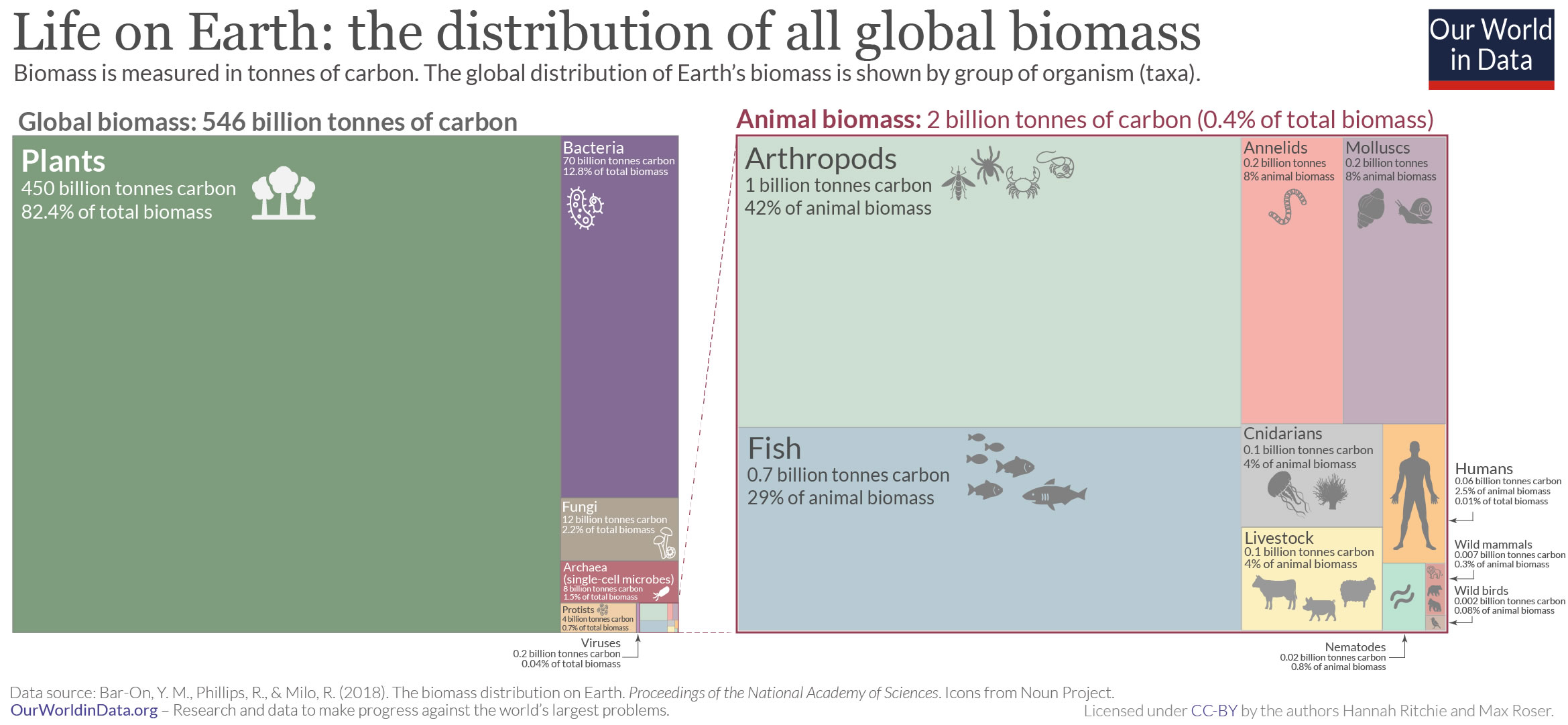
These figures are considered the best assessment of the current populations of biological life across Earth’s diverse environments. Despite the impacts of land-clearing, environmental degradation, overfishing, the displacement and extinction of many species including indigenous peoples, the remaining natural world still represents over 98% of the current living biomass on Earth.
All that nature achieves without any human involvement is profoundly significant because it clearly shows that there is an intelligent and very competent force guiding and supporting the natural world. All the living biomass sustained in wilderness areas, forests, reserves, parks, creeks, rivers, lakes and in the oceans, exists without any help from us. Humans and their domestic crops and livestock account for less than 2% of the total living biomass on Earth. This highlights how Nature is indeed the pre-eminent force behind life on Earth, supporting a vast range of species, sustaining and adapting them to changing conditions over millions of years.
Knowing that humans and their food production activities account for such a minor part of the living biomass, consider how modern agriculture requires so many specialized inputs and practices such as new seeds and/or plants each season; industrial fertilizers, chemicals and biological agents; irrigation systems and pumps; fencing and/or buildings; machinery and fuel; tilling and ploughing the soil; electricity; human labour; packaging and transport. (Even with all those resources and actions deployed), the very same forces that sustain the over 98% of the wild living biomass, are still providing the sunlight and warmth, rain and weather conditions, soil microbes and minerals, Co2 in the air, changing seasonal influences and the very impulse for life to germinate, grow and flourish.
Not too far from where you live, there will be places where you can see nature thriving all by itself. This typically this occurs along creek and river banks where ideal conditions have been achieved in regard to water availability, soil fertility and sun exposure. Plants of many forms colonize over time and grow to create ecologies that attract and sustain more life forms including insects, birds, mammals, soil organisms and many others, forming a symbiotic association.
Through regular and sustained observation of these thriving natural ecologies, we can discern the fundamental conditions required to achieve a resilient and abundant natural ecosystem. These insights also allow us to tune into the very elements and forces that influence and sustain nature, helping us to both optimize the natural growing conditions for our range of crops and to promote nature’s productive momentum through the seasons.
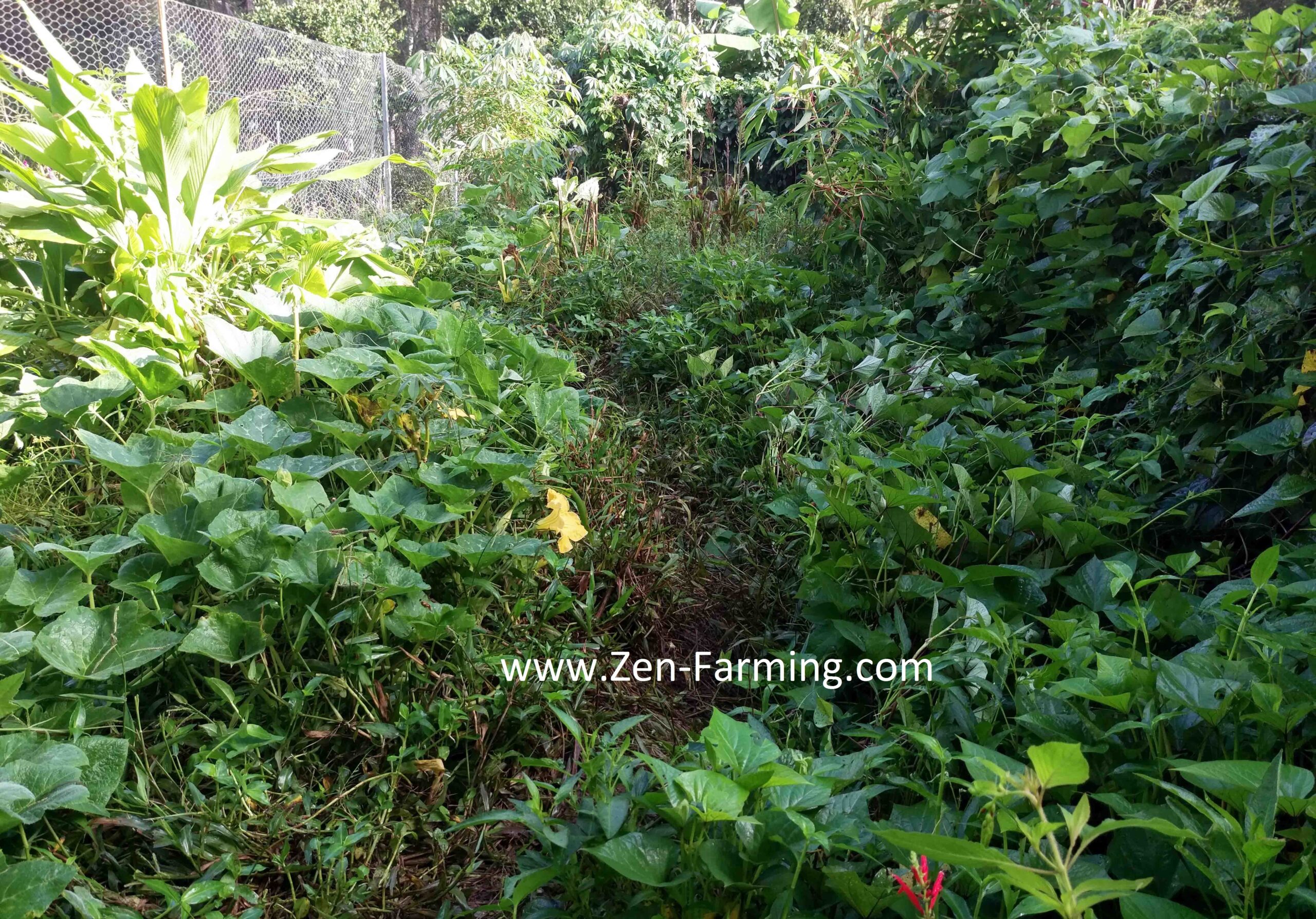
Co-creating with nature on its own terms achieves a level of efficiency, resilience and productivity backed by millions of years of survival, resilience and potential to thrive. We now have the opportunity to get on the front foot collaborating with nature, offering our extensive range of perennial and annual crops, in a strategic arrangement of productive ecology, with integrated livestock foraging through seasonally maturing and rotated cropping-forage guilds, modelling nature’s own inherent ways of maintaining fertility and productivity in perpetuity.
Cheers to ecological abundance with natural ease!
Zen-Farmer Matt
www.Zen-Farming.com
Recent Comments